PICABIA. Open the gates of night.
A Night with Francis Picabia
From 9 October 2026 to 24 January 2027, Palazzo Reale presents the largest exhibition ever held in Italy on Francis Picabia (1879-1953), one of the most original and influential figures in twentieth-century art.
Over 170 works from European museums and international collections, together with photographs, personal documents and previously unseen family archives. The exhibition does not follow a chronological order: it unfolds as a sleepless night spent in the artist’s company, from dusk to dawn. Each room corresponds to an hour of the night and to a theme.
“For him, it was not enough simply to live; one had to live twice, to live by day and by night, to live with style, turning existence into a celebration, an adventure pursued to the point of ecstasy.”
Anne Berest Picabia, curator
An Artist Who Never Stopped Changing
Born in Paris to a Spanish father and a French mother, Picabia lived and worked between Paris, New York, Barcelona, Zurich and the French Riviera, mixing with Marcel Duchamp, Gertrude Stein, Pablo Picasso, Isadora Duncan and Erik Satie. He moved through Impressionism, Fauvism, Cubism and Dada without ever identifying with a single movement, and was among the first pioneers of abstraction, alongside Kandinsky and Malevich. Every time his visual language became recognisable, he abandoned it to start over.
[Not a valid template]
The Journey: Eleven Rooms, Eleven Hours of the Night
Passionate love, dance, music, Spanish roots, war, collective creation: the themes that shaped Picabia’s life and work become the stages of an immersive, sensory journey. For Picabia, night was the moment when “all things coexist without contradicting one another,” and a way of intensifying existence.
- Opening the Doors of the Night. The title comes from a line by Victor Hugo. Here visitors enter the artist’s mental laboratory through the thirteen “Black Albums.”
- The Spanish Night. The Sevillian nights of his childhood, Holy Week, flamenco.
- Relâche. The 1924 Dada ballet created with Erik Satie, and René Clair’s film Entr’acte.
- Dancing on the canvas. Dancers, machines and movement: the road to abstraction.
- Love Parade. Desire.
- Night Fever. Night as a space where perception is transformed.
- Mysteries. A secret chamber at the heart of the exhibition, with a work to be viewed on both sides.
- Monsters and Nightmares. When the night turns upside down and faces become distorted.
- The Mystical Night. Virgins, saints and Baroque Spain.
- Picabian Parties. The Riviera galas, Dada as a collective celebration, listening stations with music.
- Day Is Not the Opposite of Night. Opposites do not clash, they overlap: the morning light and the last paintings.
Some of the Works on View
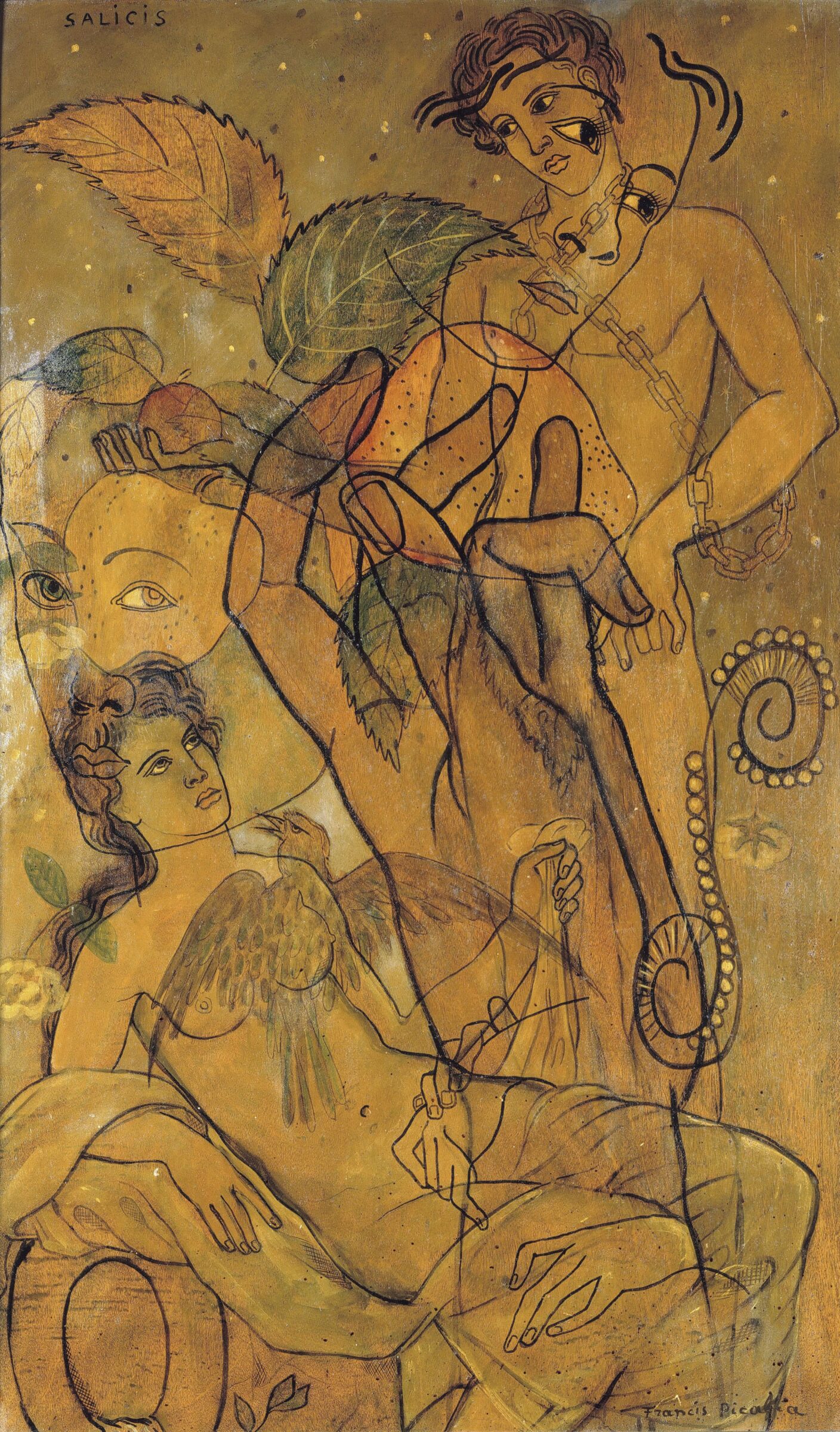
- Salicis (1929): the overlapping and metamorphosis of images, through the myth of Danaë and the shower of gold.
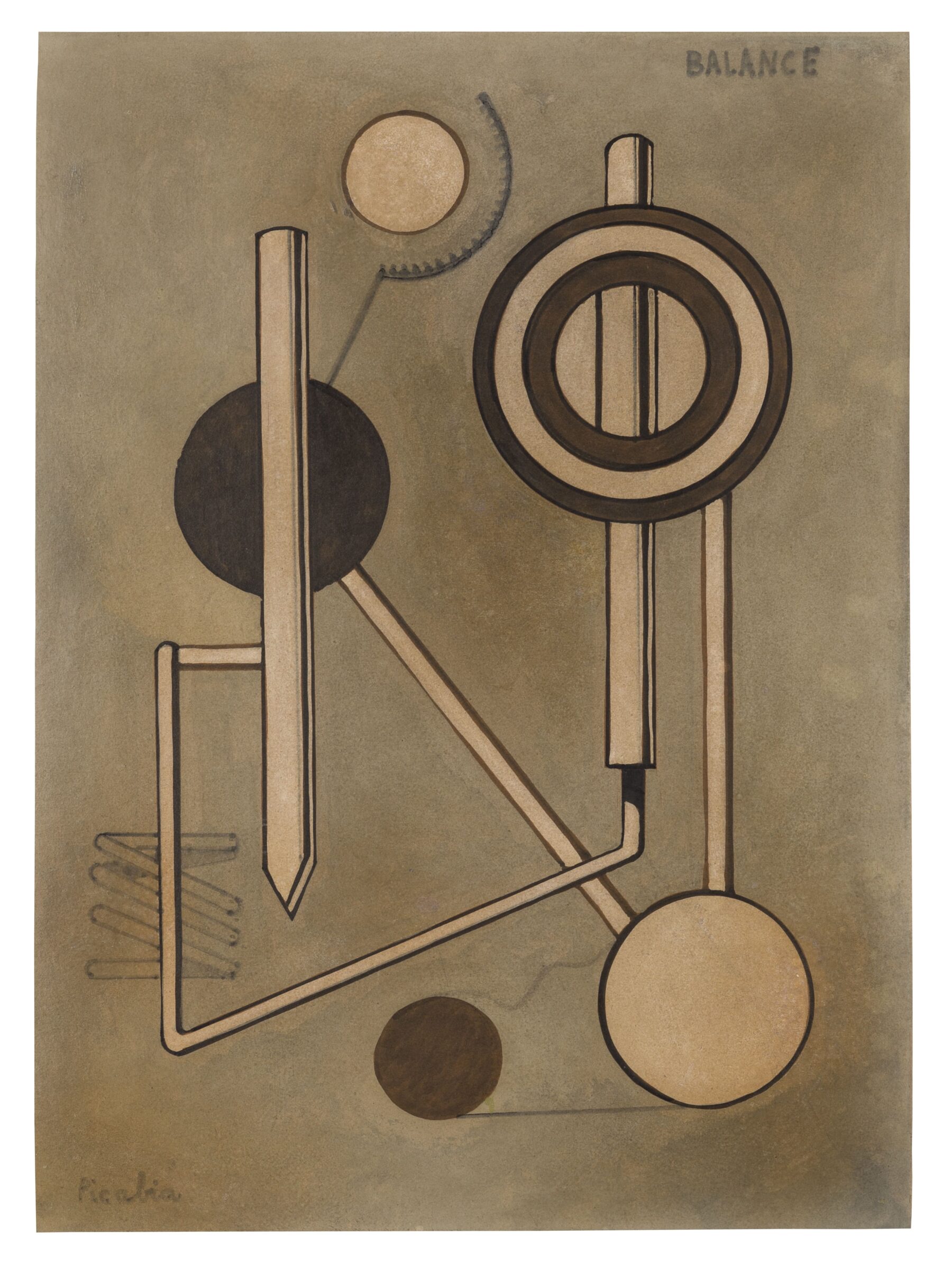
- Balance (1919-20), Berardo Collection, Lisbon: enlarged mechanical elements that become a new pictorial vocabulary.
- Femmes au bull-dog (Women with Bulldog, c. 1940-41), Centre Pompidou, Paris: one of Picabia’s most celebrated works.
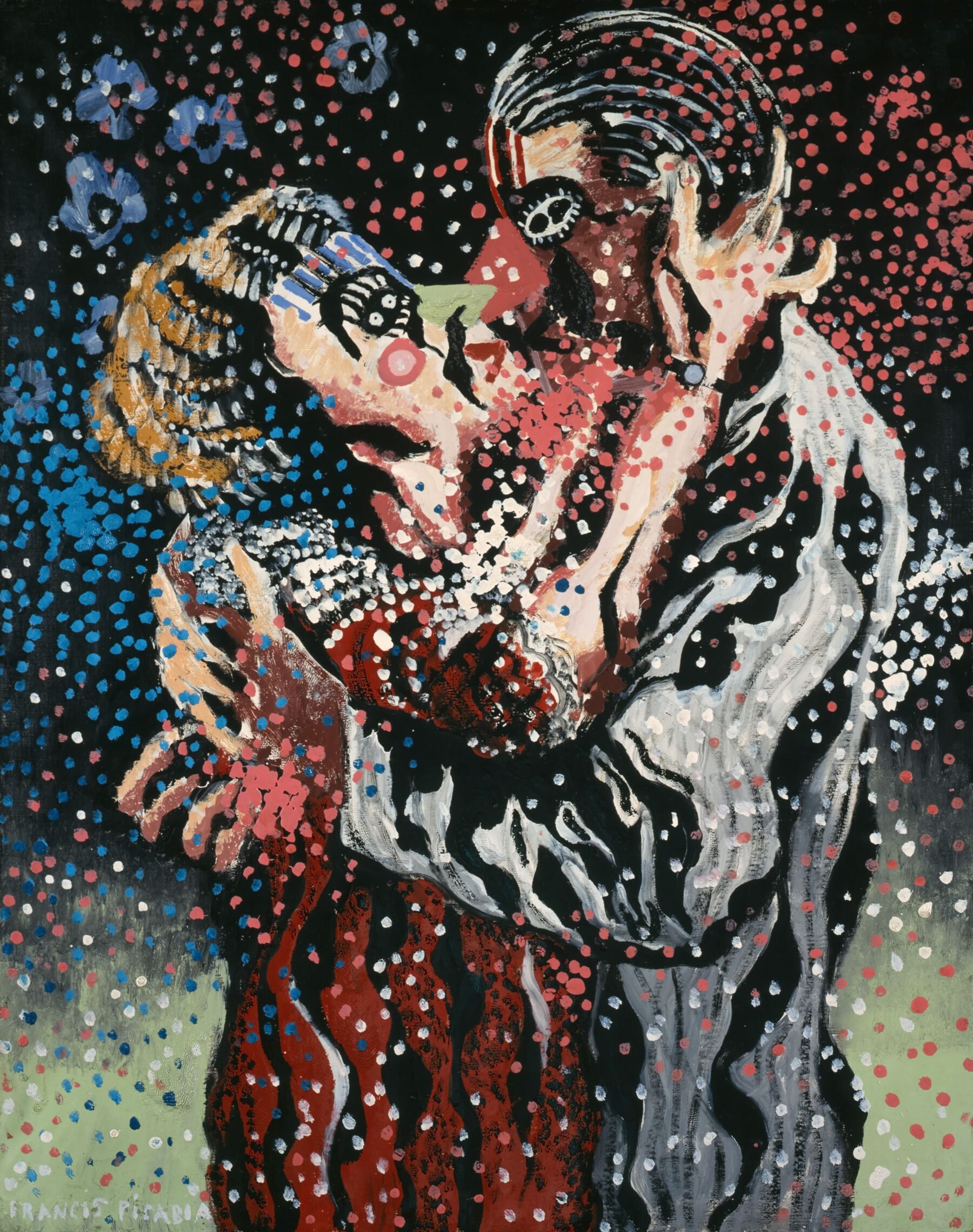
- Mardi gras (Le Baiser) (Mardi Gras (The Kiss), c. 1924-25): the carnivalesque side of the “Monsters” period, painted with Ripolin.
- Sans titre (Untitled, 1898), Roberta Cerini Baj Collection: the earliest known work by the artist, shown only once before, in Turin in 1974.
The Curator
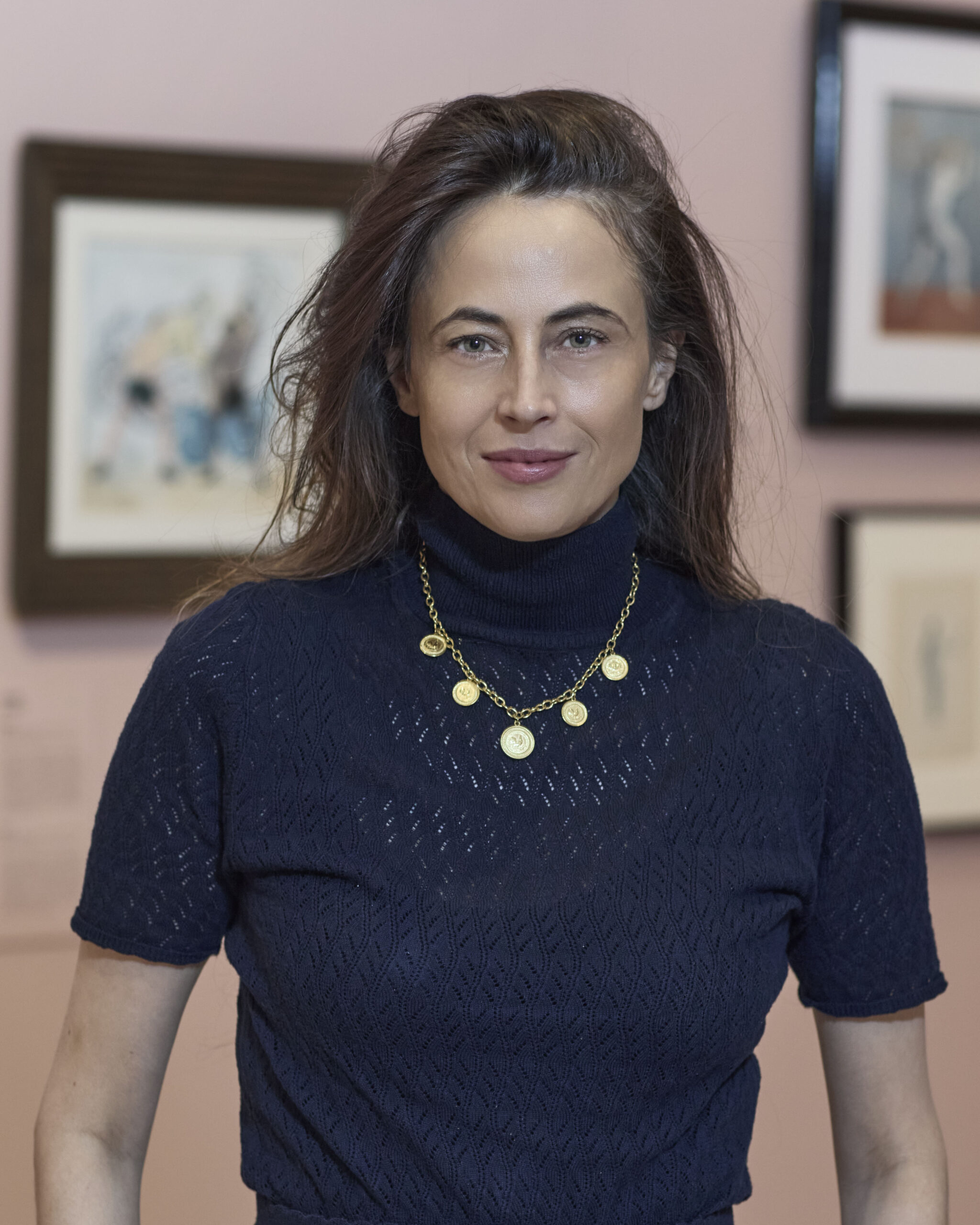 Anne Berest Picabia is the artist’s great-granddaughter and co-author of Gabriële, an intimate portrait of Francis Picabia through the life of his wife, Gabriële Buffet-Picabia. The book was selected by the New York Times as one of the ten best works of historical non-fiction of 2025. She conceived the exhibition “in my own way, as a writer: intimate, narrative, woven with emotions, memories and biographical echoes.” The Comité Picabia, committed for decades to the study and authentication of the artist’s work, provided the project with its scholarly foundation.
Catalogue
Published by Skira, with critical essays, archival material, iconographic documentation and thematic insights.
Buy it here.
Lenders
MART – Museum of Modern and Contemporary Art of Trento and Rovereto (Gian Enzo Sperone Collection), Royal Museums of Fine Arts of Belgium, Musée d’Ixelles, Centre Pompidou, Musée d’Art Moderne de Paris, Musée-Bibliothèque Pierre-André-Benoît, Musée de Grenoble, Kunsthaus Zürich, Centro Cultural de Belém – Berardo Collection, and important private collections.
Information
Palazzo Reale, Piazza del Duomo 12, Milan
Tuesday, Wednesday, Friday, Saturday and Sunday 10:00 am – 7:30 pm · Thursday 10:00 am – 10:30 pm · Closed on Mondays
Get tickets · All information
Promoted by the City of Milan – Culture. Co-produced by Palazzo Reale and MADEINART. Under the patronage of the Consulate General of France in Milan and the Institut Français. Partner: Urban Vision Group.